Velvet Formal Dresses: How to Choose the Right Level of Formality
Under harsh ballroom spotlights, cheap velvet photographs like a bathmat. Shoppers often assume any plush fabric counts as high-end eveningwear, only to arrive at a winter wedding sweating through heavy polyester or looking too casual for the dress code. You can avoid that trap once you know how fabric weight, pile direction, and tailoring behave in motion. Use this guide to pick velvet formal dresses that suit your venue, hold their shape, and look rich from every angle.

What Makes an Outfit Formal
Not all velvet belongs at a black-tie affair. The difference between a $60 party dress and true luxury haute couture eveningwear comes down to how the fabric is woven, how the pattern pieces are cut, and how the surface handles light.
Woven Silk-Rayon vs. Thin Stretch Knit
True formal gowns use woven silk-rayon velvet or heavyweight silk velvet. These fabrics have a structured backing that holds architectural folds and drapes cleanly over the hips without clinging.
Thin polyester-spandex knit velvet stretches four ways and hugs every seam of your undergarments. When you shop online, check the product specs for a hidden back or side zipper and structured measurements; pull-on velvet dresses almost always read casual in person.
Pile Direction and Light Absorption
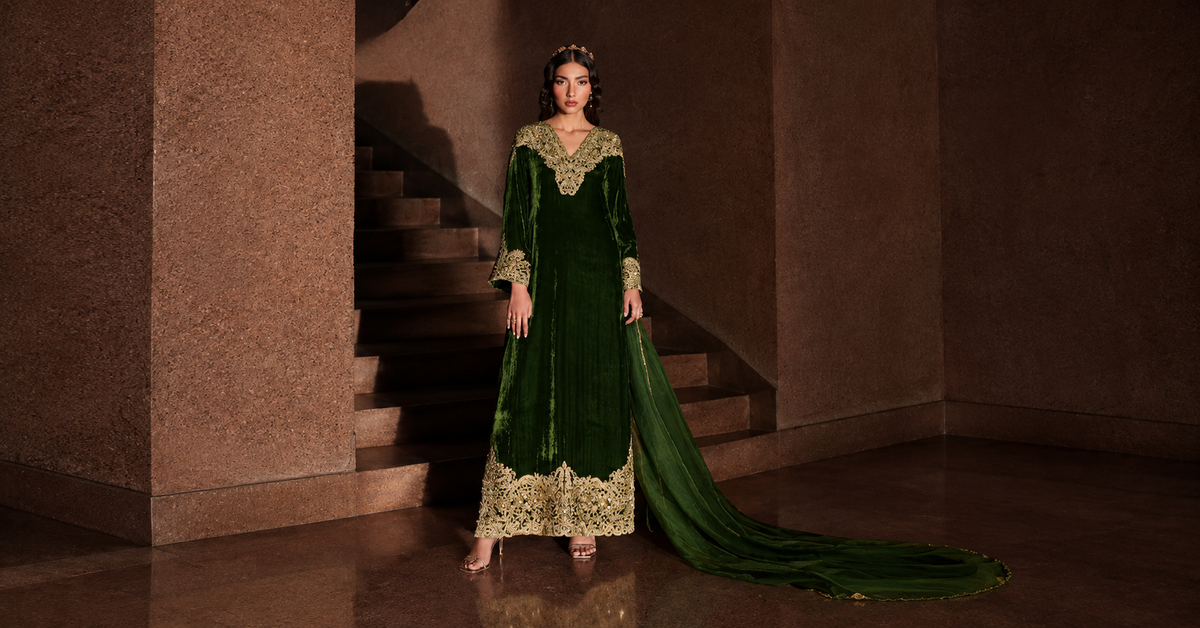
Run your hand up a piece of velvet and it feels rough while turning deep and matte; stroke it downward and it feels smooth while turning shiny. Luxury dressmakers cut every panel of a gown with the pile running upward so the color looks impossibly deep under evening lights, as seen in dark statement pieces like Smoky Black and Twilight.
Mass-market brands often cut panels in opposite directions to save fabric on the factory floor. As a result, the skirt can look a full shade lighter than the bodice the moment you step under a chandelier.

Passing the Smartphone Flash Test
Cheap synthetic velvet acts like a reflector under direct camera flashes and banquet spotlights. What looks like a rich burgundy dress in diffused studio photos can turn shiny pink-red over your stomach and hips in event photos.
Before buying, scroll straight to customer review photos or close-up studio shots taken under directional light. If the highlights on the dress look chalky white instead of a soft tone of the fabric color, leave it in your cart.
Compare Simple and Embellished Designs
Velvet brings so much visual texture on its own that extra hardware can easily tip a gown from elegant into costume territory. Deciding between a clean cut and surface sparkle depends on the color of the fabric and how the trim is attached.
When Clean Tailoring Wins
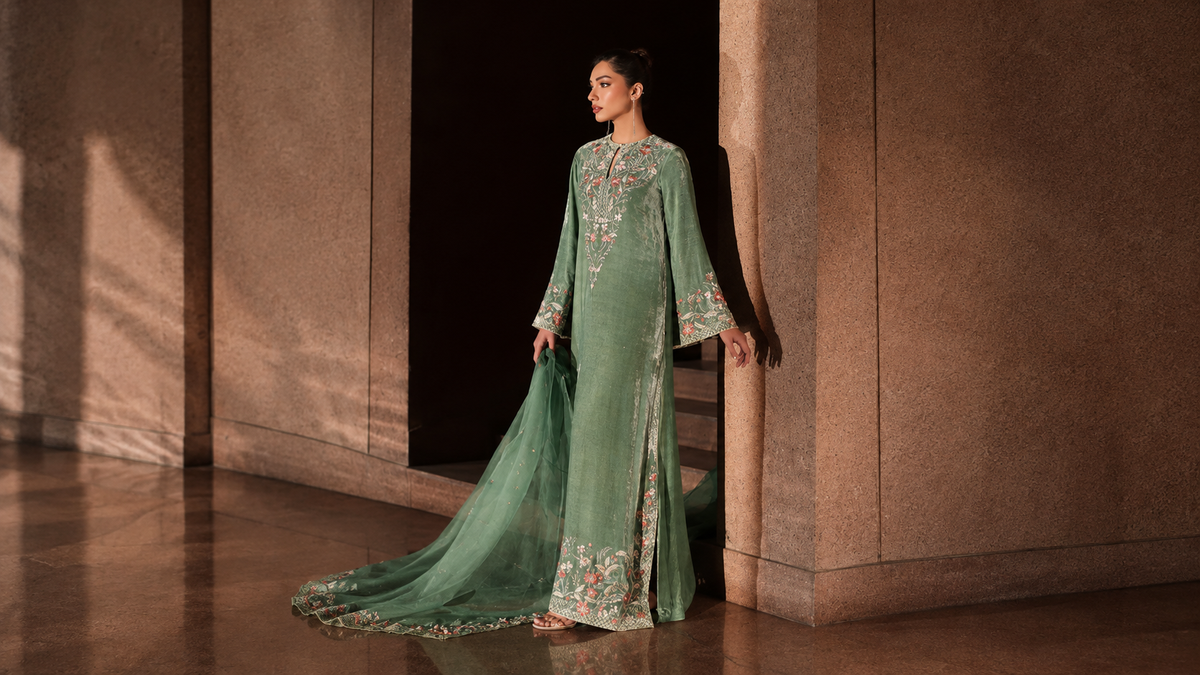
Jewel tones like emerald, sapphire, oxblood, and plum rarely need heavy all-over decoration. The shadows in the fabric folds create natural contrast, especially on a long silhouette like Sage in henna green velvet or Eclipse.
If you choose a more minimalist gown, let the construction create the drama. Look for sharp asymmetric necklines, structured cuffs, or a sweeping 58-inch hem that shows off the weight of the cloth.
Picking Smart Embellishment
Dark tones and warm jewel shades come alive when metallic or crystal work is placed with precision. Strategic embellishment—like the asymmetrical neckline with hand-embellished chain and crystal work on CAIA’s Amber velvet dress, or the varied-size pearls and silver cutdana on Fuchsia—adds definition right where the eye lands.
Stick to focused hand-embroidery so the dress doesn't fight its own texture. Skip glued-on rhinestones on stretch velvet altogether, as the glue cracks and drops stones the first time the fabric stretches when you sit.
Avoiding Underarm Chafing and Snagged Pile
Beaded sleeves and crystal side panels have a hidden flaw on velvet gowns. Every time your arms swing, rough metal prong settings catch on the plush waist panels and rip tiny bald patches into the fabric.
Zoom in on the armholes and side seams in the store's product gallery. You want to see either smooth piping acting as a buffer zone or hand-sewn flat tilla, dabka, and pearl work—like the craftsmanship on Roselle (Blue) and Moonpearl—that won't claw at the skirt while you walk.
Match the Event and Venue
An invitation's dress code tells you the baseline formality, but the physical building dictates whether you will actually enjoy wearing velvet for six hours. Weight, sleeve length, and hemline need to work with the room temperature and the floor under your feet.
| Dress Code Tier | Ideal Velvet Style | Cuts & Details to Skip | CAIA Velvet Pick |
|---|---|---|---|
| White Tie / Gala | Structured gown with boned bodice, floor-sweeping silhouette, and fine crystal embellishment | Midi hemlines, crushed velvet, cutouts, unlined stretch knits | Smoky Black or Hazel |
| Black Tie | Floor-length column or A-line formal silhouette in deep jewel tones or black | Above-the-ankle hems, casual tie belts, thin spaghetti straps | Sage or Twilight |
| Black Tie Optional / Formal | Full-length embroidered velvet ensemble or open-style formal shirt with velvet trousers | Heavy cathedral trains that overwhelm smaller dining rooms | Fuchsia or Nora (Blue) |
| Cocktail / Festive & Daytime | Luminous pastel velvet with breathable organza drape or shorter velvet shirt with raw silk trousers | Full floor-sweeping skirts that drag on crowded floors | Zaria or Roselle (Blue) |
Dressing for the Room Temperature and Flooring
A drafty marquee or stone hall in December rewards long sleeves and head-to-toe velvet sets like Fuchsia. Put a heavy dark gown in a packed indoor banquet hall with 250 guests and a busy dance floor, and you will overheat before the main course arrives.
For warmer rooms or daytime receptions, balance velvet with lighter companion fabrics. Zaria in seafoam green velvet pairs a luminous, softly sparkling velvet base with a breathable embroidered organza dupatta, while Roselle (Blue) and Roselle (Pink) pair a velvet shirt with lighter raw silk trousers and a net dupatta.

Fixing the Seated "Dinner Print"
Sitting through a two-hour plated dinner presses your body heat and weight straight into the back of your skirt. On low-density velvet, standing up reveals a shiny, flattened imprint across the seat of the dress.
Dense woven velvet blends bounce back faster than cheap synthetics, and paneled or embroidered skirts hide pressure marks well. If your skirt does flatten after dinner, head to the restroom and brush the crushed area gently upward with a dry microfiber cloth or clean paper towel to lift the pile.
Consider Silhouette and Comfort
Velvet weighs significantly more per yard than chiffon, crepe, or satin. That extra gravity changes how a dress hangs on your shoulders, how it pulls at the waist, and how it interacts with what you wear underneath.
Matching the Formal Silhouette to Fabric Weight
A full ballgown skirt made of heavy velvet puts pounds of downward pull on the waistband. Most shoppers feel much more comfortable in a sleek column, a tailored long shirt, or a structured A-line formal silhouette from the Velvet Edit ’26 collection that distributes weight evenly across the shoulders and frame.
If you love strapless velvet formal dresses, check that the bodice includes an internal waist stay. That snug grosgrain ribbon hooks inside the waist like a bra band so the heavy skirt doesn't drag the neckline down all night.
Why Boning and Slits Matter
Soft, unstructured bodices buckle under the weight of a floor-length velvet skirt, creating horizontal wrinkles around your ribs. Look for structured tailoring or custom-fitted measurements across the chest, waist, and armhole to keep the top crisp.
A knee-high or side slit does more than show a flash of leg or trouser detail. A 15-inch to 16-inch slit—like the ones engineered into Sage, Zaria, and Amber—lets hot air escape while you walk and stops a 58-inch velvet hem from kicking backward against your calves.
Stopping the Skirt from Riding Up Over Shapewear
Few things are more frustrating than pulling your skirt down every ten steps. When an unlined velvet dress rubs against nylon shapewear or tights, the directional nap acts like a ratchet and climbs up your thighs as you walk.
Always check for a smooth silk or satin lining—or pair your velvet shirt with tailored raw silk trousers like Roselle (Blue)—so the outer velvet glides effortlessly instead of gripping.
Check Product Details
Shopping for velvet online is tricky because studio retouching hides cheap construction. Knowing how to read fabric specs and spot sewing details in product photos will save you from annoying return fees.
Reading the Fiber Content Tag
An 80% rayon / 20% silk blend or high-density woven velvet is the gold standard for liquid drape and deep color saturation. It requires specialist dry cleaning, but it looks unmistakably rich in person.
If you want a lower-maintenance option, look for heavyweight woven velvet with a separate smooth lining. Avoid ultra-lightweight unlined polyester, which feels papery and generates static electricity the second you pull it out of the garment bag.
Spotting Sewing Red Flags in Product Photos
Zoom in closely on the seams, patchwork, and hemline on the product page. Because velvet has two layers of fabric moving under the sewing machine needle, factories that rush production often stretch the seams, leaving wavy, puckered ripples.
High-end craftsmanship—like the intricate coffee-brown velvet patchwork, crystal and sequin handwork, and 35-inch slit on CAIA’s Hazel—lies completely flat along every seam and hem border.
Getting Shipping Creases Out Without Melting the Pile
Velvet formal dresses almost always arrive with fold creases from the shipping box. Never touch an iron to velvet—and never press a hot steamer head directly against the outside of the dress—or you will permanently burn a flat, shiny scar into the texture.
Hang the dress by its internal ribbon loops (never use clamp hangers, which leave permanent dents) in a steamy bathroom first. To release stubborn folds, hold a handheld steamer six inches away from the inside lining and let the warm vapor relax the fibers from the back.
Shop Velvet Looks
Once you know your event's formality and how the venue is set up, narrowing down your options gets much easier. Browse CAIA’s Luxury Velvet Edit ’26 by the category that matches your invitation and run your top contender through a quick pre-checkout check.
Picks by Event Type
- For Black-Tie Galas & Evening Receptions: Look for floor-length silhouettes with rich dark pile and statement handwork like Smoky Black, Hazel in coffee brown patchwork velvet, or Sage in henna green.
- For Formal Autumn & Winter Weddings: Choose jewel-toned or richly embroidered maxis and velvet sets like Fuchsia, Twilight, Nora (Blue), or Moonpearl that balance warmth with dance-floor mobility.
- For Cocktail Parties, Daytime Events & Festive Dinners: Opt for luminous tones or mixed-fabric ensembles like Zaria in seafoam green, Amber with its asymmetrical crystal neckline, Turquoise, or Roselle (Blue).
Your 30-Second Pre-Checkout Checklist
Double-check that the hemline, slit height, and sheen level match your invitation's dress code. Verify the size chart measurements (or select custom sizing if you are between standard sizes), inspect zoom photos for flat seam finishes, and order early enough to steam out box creases before your event.
Frequently Asked Questions About Velvet Formal Dresses
Are velvet formal dresses appropriate for a black-tie dress code?
Yes, as long as the gown reaches the floor (around 56 to 58 inches) and uses a structured woven fabric rather than thin, unlined stretch velvet. Stick to dark jewel tones, coffee brown, or classic black in a tailored formal silhouette—such as Sage, Hazel, or Smoky Black—so the dress reads as true eveningwear.
Can you wear a velvet dress to a spring or indoor wedding?
You can wear velvet outside of peak winter if you match the color palette and companion fabrics to the venue temperature. Skip heavy dark layers for warm indoor events, and choose a luminous shade paired with a sheer organza dupatta like Zaria in seafoam green or Salmon, or a velvet shirt paired with breathable raw silk trousers like Roselle (Pink).
Does velvet make you look bigger in event photos?
Cheap synthetic velvet can add visual bulk because its shiny surface reflects camera flashes right across your stomach and hips. High-quality velvet cut with the pile running upward absorbs light instead of bouncing it back, which creates a smooth, matte outline in photos.
What kind of jewelry and shoes pair best with velvet eveningwear?
Let the dress dictate your accessories: pair minimalist velvet with smooth gold cuffs, drop earrings, or pearls, and skip bracelets with sharp claw prongs that snag the fabric texture or organza dupatta. For shoes, avoid velvet-on-velvet and choose metallic leather, sleek satin, or embellished heels to break up the plush finish.
How do you keep a velvet gown from collecting lint and static?
Avoid using sticky tape rollers aggressively on high-end velvet, as the glue residue can mat down the pile and attract even more dust. Instead, brush the dress downward with a soft clothes brush before leaving home, and lightly mist the inside lining with anti-static spray so the skirt doesn't cling to your legs.