المقال: Velvet Dresses for Women: How to Choose the Right Dress for Your Occasion
Velvet Dresses for Women: How to Choose the Right Dress for Your Occasion
Almost every winter wardrobe hides at least one velvet regret bought under flattering studio lights and worn zero times. Online photos mask the flaws that ruin an outfit in person, from harsh camera-flash glare to static cling and bulky waist seams. Choosing flattering velvet dresses for women comes down to checking how the fabric weight, velvet pile, and lining behave in real rooms before you pay.

Start with the Occasion
Velvet carries far more visual weight than chiffon, satin, or crepe. A dress that looks rich under warm chandeliers at 8 p.m. can easily feel heavy and out of place at a bright afternoon lunch. Matching your dress to the venue, timing, and weather saves you from spending the night tugging at your sleeves or overheating at your table.
Matching Dress Codes Without Overdoing It
For winter work dinners, festive drinks, and semi-formal parties, knee-length or midi cuts hit the sweet spot. Clean wrap styles, tailored shifts, and subtle A-line shapes read polished without looking like you misread the invitation. You can dress them down with sleek leather boots or sharpen them up with strappy heels and gold earrings.
Evening weddings and black-tie galas call for true couture formalwear with longer hemlines and richer drape. Floor-length columns, off-the-shoulder gowns, and sleek maxi cuts hold their own next to tuxedos—our guide to velvet formal dresses breaks down how to match each dress-code tier in detail. If you are attending a daytime ceremony that spills into an evening reception, skip heavy dark floor-sweeping styles and pick a lighter shade with an airy drape.
Checking Room Temperature, Seating, and Weather
Plush fabric traps body heat much faster than flat weaves. A high-necked, long-sleeved polyester dress feels cosy during the walk from the car park, then turns stifling twenty minutes into a crowded dinner or packed dance floor. If your venue runs warm, look for breathable viscose-silk blends, open necklines, or ensembles paired with sheer organza.

Check the weather forecast before wearing delicate occasionwear outdoors, too. Raindrops flatten the upright fibres on silk and rayon velvet, leaving dark water rings that even specialist dry cleaners struggle to lift. When drizzle is likely, either stick to synthetic stretch velvet or stay strictly under an umbrella between the car and the door.
Think about how long you will spend sitting down as well. Three hours on textured banquet chairs at a wedding dinner will press a flat, shiny imprint across the back of a stiff cotton velvet skirt. Fluid viscose blends and dense woven velvet recover their bounce far better when you stand up for photos.
Choose a Silhouette and Level of Formality
Because velvet has raised fibres on top of a woven or knitted base, every fold and seam is noticeably thicker than regular dress fabric. A cut that hangs softly in thin georgette can suddenly stand stiffly away from your frame in dense velvet. Picking the right silhouette ensures the fabric skims your shape instead of adding volume where you least want it.
How Different Cuts Handle Plush Fabric
Wrap and A-line dresses are the safest shapes to buy online because they glide past the hips without pulling tight. The diagonal crossover on a wrap bodice breaks up heavy fabric across the chest, while a gentle A-line skirt gives you room to walk and sit comfortably. Both shapes suit everything from smart dinner dates to winter wedding guest outfits.
Fitted sheath and bodycon styles deliver a sharper evening look, provided the fabric has strong elastane recovery. Cheap stretch velvet loses tension quickly, bagging out around the knees and seat halfway through dinner. Look for dense, medium-to-heavyweight stretch blends that snap straight back into shape when tugged gently between your fingers.
Bias-cut dresses—where the fabric is cut diagonally across the grain—drape like liquid over curves without needing fussy darts. This cut only works in lightweight silk or viscose velvet, though. Heavy cotton or stiff synthetic velvet cut on the bias tends to twist awkwardly around your legs as you walk.
Keeping Heavy Proportions Balanced
Dark, plush fabric absorbs light and creates a solid visual block from shoulder to ankle. Wearing a high collar, full-length sleeves, and a floor-length hem all at once can overwhelm petite frames or make fuller busts feel boxed in. Opening up just one element brings instant breathing room back to your outfit.
If you love long sleeves for warmth, pair them with a V-neck, sweetheart, or asymmetric neckline—like the crystal-detailed cut on CAIA’s Amber velvet dress—to show your collarbones. Prefer modest coverage up top? Choose bracelet-length sleeves, flared cuffs, or a clean front slit like Look 7 in structured black velvet so the skirt breaks cleanly as you move.

Avoiding Waist Bulk and Undergarment Friction
Pay close attention to how the bodice meets the skirt in close-up product photos. Thick velvet bunched into elastic shirring or tight gathers at the waistline can add two inches of extra padding right around your middle. Flat princess seams, clean vertical darts, or smooth straight-cut silhouettes lie much sleeker against your torso.
Watch out for hidden friction underneath the dress, too. Unlined stretch velvet acts almost like Velcro against lace bras and textured shapewear, catching on raised seams and bunching up around your hips. Wearing seamless microfibre undergarments, choosing a slick inner lining, or pairing a velvet shirt with smooth raw silk trousers like Roselle (Pink) lets the outer layer fall cleanly every time you stand up.
Compare Velvet Texture and Embellishment
"Velvet" describes how the fabric is constructed, not the raw fibre used to make it. That explains why two nearly identical velvet dresses for women can sit hundreds of pounds or dollars apart in price and feel completely different against your skin. Reading the composition label tells you straight away how a dress will drape, breathe, and photograph.
Reading Fabric Labels Before You Buy
- Silk and viscose (or rayon) velvet: Soft, breathable, and fluid in motion, this classic blend gives upscale formalwear its deep lustre and graceful movement. It costs more and requires dry cleaning, yet nothing else matches how light and cool it feels indoors.
- Cotton velvet: Denser and noticeably more matte, cotton velvet holds crisp, structured shapes with very little stretch. It works brilliantly for tailored shift dresses and blazer silhouettes, though the pile crushes more easily if packed tightly in a suitcase.
- Polyester stretch velvet: Blended with a small percentage of elastane or spandex, this is the everyday workhorse of affordable occasionwear. It shrugs off suitcase creases and stretches comfortably over curves, though ultra-thin versions trap heat and look overly shiny under bright lights.
- Crushed and burnout (devoré) velvet: Crushed velvet is twisted to press the fibres in varied directions, while burnout velvet etches sheer patterns into plush fabric. Both hide travel wrinkles effortlessly and bring a relaxed, vintage edge that suits cocktail parties better than strict black-tie events.
Spotting Harsh Flash Glare Before Checkout
Have you ever seen a dress look rich in a shop mirror, only to turn glaring silver-white in group phone photos? That comes down to fibre quality and the direction of the velvet pile. Run your fingers down the length of a velvet garment: if it feels slightly rough brushing downward, the pile is cut facing up, which drinks in light and produces a deep, saturated finish.
Most high-street dresses are cut with the pile brushing downward so they feel smooth when you stroke them on the hanger. In good fabric that still looks lovely, whereas thin, low-grade synthetic velvet cut downward acts like a reflector dish under camera flashes. Whenever you shop online, scroll past the studio shots to close-up directional photos or customer snaps taken indoors at night to see how the dress handles real phone flashes.
Checking Embroidery and Beadwork Quality
Embellished velvet is a winter staple, ranging from subtle tonal thread embroidery along cuffs to intricate pearl, dabka, and cutdana handwork on statement pieces like CAIA’s Twilight velvet dress. Zoom right into the product photos around the edges of any stitched motif before buying. Quality embroidery uses proper backing stabilizer underneath so the surrounding velvet stays smooth, while rushed work pulls the plush fabric into wavy puckers around the stitches.
Check where heavy embellishment sits on the dress as well. Sequins, cut-glass beads, or raised metallic embroidery placed right under the armhole or along the sides of the bust will scrape against velvet sleeves every time you move your arms. Within a single evening, that friction rubs bald patches straight into the sleeve nap—keep heavy surface work focused on necklines, vertical panels, cuffs, and hems instead.

Select Colour
Colour behaves differently on velvet than on flat satin, linen, or silk. Millions of tiny upright fibres catch light at the peaks of folds while casting deep shadows inside the creases. That natural interplay of light and shadow is why certain shades look captivating in velvet while others wash out or show every wrinkle.
Jewel Tones, Classic Black, and Lighter Shades
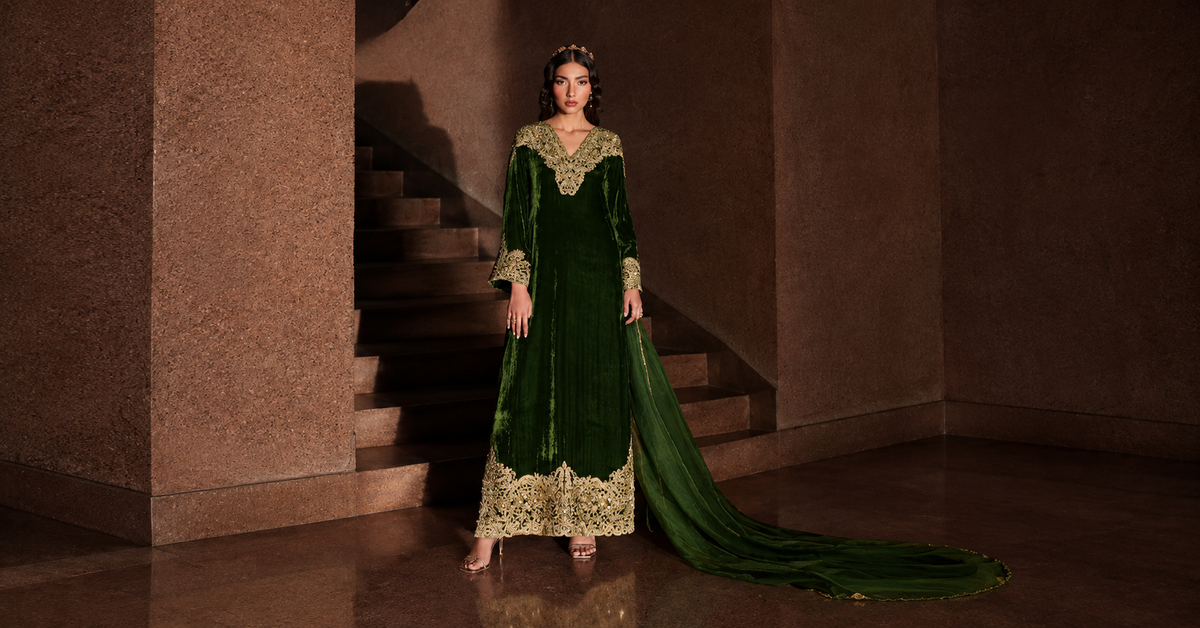
Deep jewel tones—emerald green, burgundy, sapphire blue, and rich berry shades like Fuchsia—flatter almost every undertone because the dye settles deeply into the pile. Those built-in shadows naturally contour your silhouette without needing fussy draping or heavy jewellery. They also forgive minor creases far better than pale fabrics.
Jet black velvet is timeless for evening formalwear, though dim reception lighting can swallow every seam detail until your dress reads as a flat dark rectangle in photos. If you go with black, look for interesting texture or skin contrast: an open neckline, metallic bodice embroidery, sheer sleeves, or bright drop earrings keep your outfit sharp on camera.
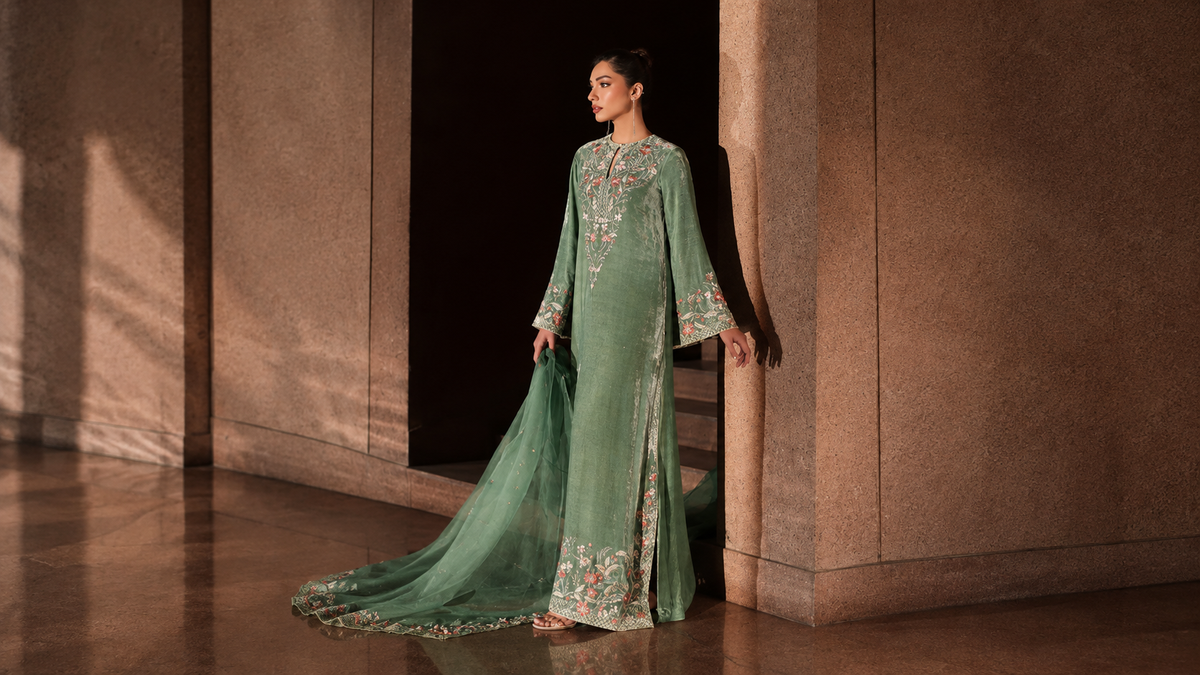
Pale shades like champagne, dusty rose, sage, and soft peach—seen on CAIA’s Salmon velvet ensemble—offer a fresh alternative for winter weddings and daytime celebrations. Because light bounces off pale pile rather than sinking into it, thin fabric will highlight pocket bags, belly buttons, and inner seam allowances. Only buy pale velvet when the fabric feels substantial and comes properly lined.

Accounting for Evening Bulbs and Dark Dye Rub
Bright studio photography makes dark colours look much clearer on your screen than they appear after sunset. Under warm, amber reception lighting, midnight navy, espresso brown, and dark forest green frequently read as plain black. If you want your colour choice to stand out clearly in evening rooms, pick half a shade brighter than your first instinct.
Once a dark velvet dress arrives in the post, run a ten-second dye check before hanging it next to light clothing. Heavily saturated burgundy, navy, and emerald velvet sometimes sheds loose surface dye—known as crocking—onto cream clutches, pale wool coats, and warm underarms. Rub a dry white tissue firmly along an inside hem seam; if colour lifts onto the paper, air the dress out and carry a dark or metallic bag instead.
Confirm Fit and Ordering Details
Velvet leaves far less margin for sizing guesswork than stretchy jersey or floaty chiffon. Taking five minutes to check your numbers and read the construction specs prevents awkward return-window scrambles right before your event.
Taking Measurements for Stretch vs. Non-Stretch Velvet
Put on the exact bra and foundation garments you plan to wear to the event, then take fresh bust, ribcage, natural waist, and fullest-hip measurements with a soft tape. Check those numbers against the brand's garment chart—or select custom sizing on made-to-order pieces across CAIA’s Velvet Edit ’26 collection—rather than relying on your usual high-street dress size.
Pay extra attention to the shoulders, armhole, and ribcage if the fabric contains zero elastane, especially on hand-crafted ensembles like Roselle (Blue). Woven silk, rayon, and cotton velvet will not give even half an inch when you breathe deeply, hug friends, or reach across a dinner table. Always buy non-stretch velvet to fit your largest measurement comfortably—a local tailor can take in a loose waist easily, whereas tight velvet seams cannot be let out without leaving permanent needle holes in the pile.
Inspecting Lining and Zipper Construction
Scan the product details carefully to confirm whether the dress includes a full lining. A breathable cupro, viscose, or smooth stretch-satin lining stops rough inner seams—especially behind heavy embroidery—from scratching your skin. Just as usefully, a proper lining prevents winter tights from gripping the inside of your skirt and twisting the dress up your thighs with every step.
Test the zipper all the way up and down as soon as you take the dress out of its packaging. Invisible zippers often snag where thick waist seams meet plush fabric, and cheap plastic teeth split easily under tension. Leave any external return ribbons attached while you try the dress on with your event shoes so you can exchange a sticky zipper without hassle.
Leaving Time for Alterations and Safe Steaming
If you regularly need maxi dresses shortened—or if you are ordering hand-embroidered formalwear that takes four to six weeks to craft—build extra buffer days into your event timeline. Hemming lined or embroidered velvet takes delicate handwork or specialized presser feet so sewing machines do not stamp flat tracks along the bottom edge. Rush alterations on velvet rarely look clean.
Never touch a hot iron directly to velvet, and keep clip-on skirt hangers away from velvet waistbands—heat and metal clamps crush the upright velvet pile permanently. As soon as you decide to keep the dress, hang it by its inner ribbon loops on a padded hanger. Turn the garment inside out and hold a handheld steamer a few inches away from the lining at least a day before your event, letting gentle steam relax any folding creases from the inside.
Frequently Asked Questions
Can you wear velvet dresses in early autumn or spring?
Lightweight viscose-silk or burnout velvet works well during transitional months, especially for evening receptions once temperatures drop. Skip heavy black floor-length formalwear in April or September and choose midi cuts, breathable organza pairings, or lighter shades like seafoam, dusty rose, and champagne. Save thick cotton velvet and dark long-sleeved gowns for late autumn and winter dates.
Does velvet add bulk or flatter curvy figures?
Velvet flatters curves well when the cut skips gathered fabric around the waist and hips. Deep jewel tones cast subtle shadows inside the velvet pile that naturally contour your silhouette, while wrap bodices, V-necklines, and flat princess seams skim cleanly over your frame. Thin, unlined stretch velvet is the main version to avoid, since it catches on undergarments instead of draping smoothly.
Should you size up when ordering velvet dresses for women online?
Only size up if the dress is cut from non-stretch silk, viscose, or cotton velvet and your bust or hip measurements sit between two sizes on the brand's chart. Woven velvet has zero give across the ribcage and seat, whereas a local tailor can easily nip in extra room at the waist. For polyester-elastane stretch velvet, stick to the size matching your exact measurements so the shoulders and neckline stay in place.
How do you pack a velvet dress in a suitcase without crushing the pile?
Turn the dress inside out so the lining takes any friction, then lay a thin dry-cleaning plastic bag between the folds to trap a soft cushion of air. Rest the folded dress loosely on top of your shoes and toiletry bags rather than wedging it at the bottom of a tightly zipped case. Hang it up as soon as you check into your hotel so gravity and light steam from the inside can relax soft creases overnight.
What coats and bags won't damage plush or embroidered velvet?
Smooth satin coat linings are your safest partner—unlined wool, faux shearling, and chunky knitwear rub against velvet sleeves and snag raised embroidery. Check your bag strap and hardware just as closely, because rough metal chains and sequined clutches will scrape bald marks into your shoulder or hip within a couple of hours. Handheld leather, satin, or smooth metallic clutches keep the fabric intact all evening.